
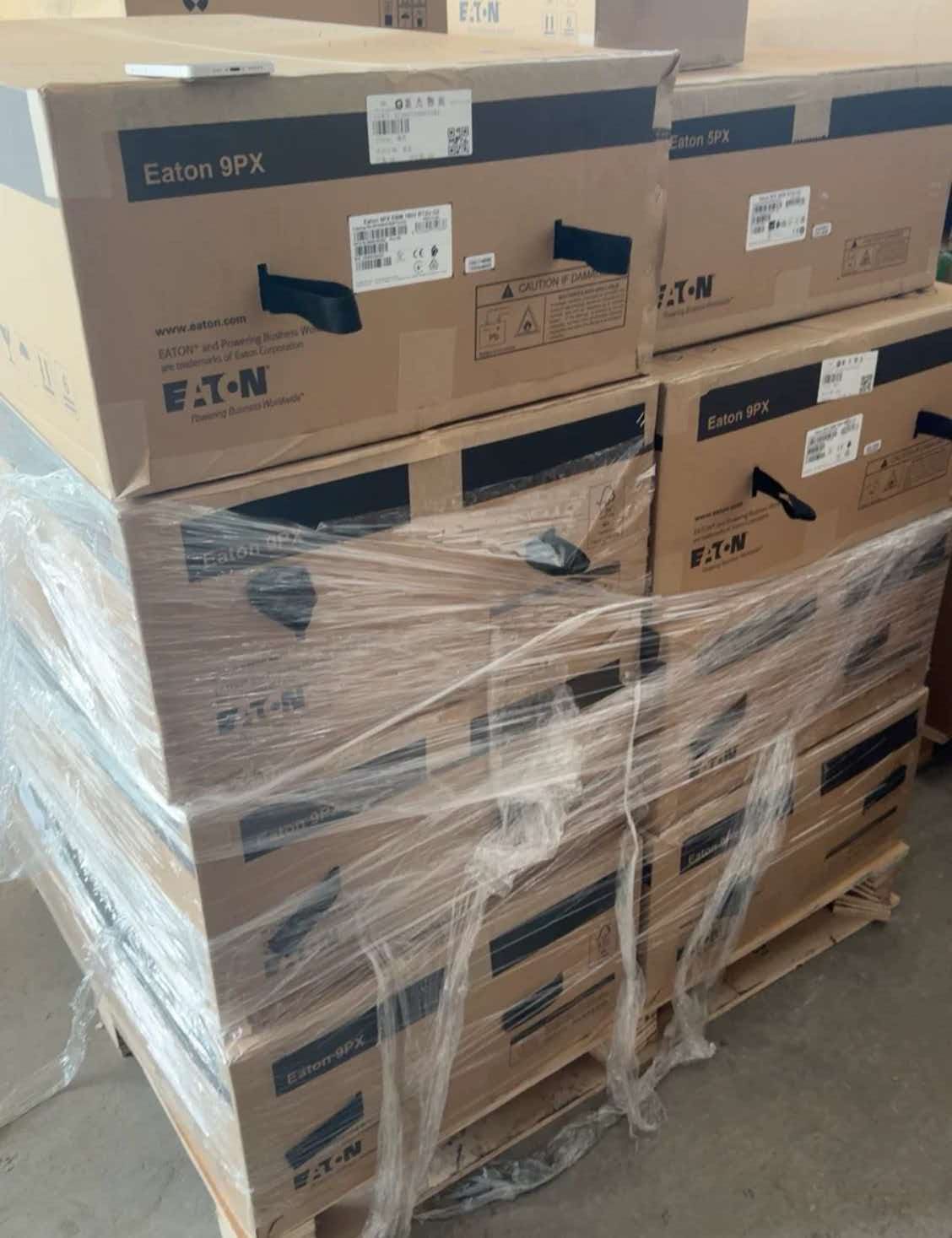
An uninterruptible power supply (UPS) in an industrial environment is not the same as an office UPS. Industrial loads such as PLCs, servo drives, safety controllers and process instrumentation need clean, uninterrupted power under conditions — heat, dust, voltage fluctuation — that would destroy a consumer-grade unit. This guide covers the selection process in the order you should apply it.
1. Calculate the Load First, Not the UPS
Every UPS selection starts with the load. Add up the power consumption of every device the UPS must protect:
- PLC / safety controllers and I/O modules
- Industrial PCs and HMIs
- Servo drives and frequency inverters (note their inrush current)
- Sensors, transmitters and instrumentation loops
- Network switches, routers and control cabinets
Two practical rules:
- Use watts, not just VA. The power factor (PF) of the load matters — a 1000 VA UPS with 0.6 PF delivers only 600 W. Most Eaton industrial UPS units list both VA and W ratings.
- Add 25–30 % headroom. Never run a UPS at more than 70–75 % of rated load; efficiency drops and battery runtime shrinks as load approaches the limit.
2. Choose the UPS Topology
Per IEC 62040-3, UPS topologies fall into three classes. The choice depends on how critical the load is and how dirty the mains supply is:
| Topology | Transfer time | Best for | Eaton examples |
|---|---|---|---|
| Standby (VFD) | ~5–10 ms | Non-critical devices, small loads, cost-sensitive | BC series — see BC850R |
| Line-Interactive (VI) | ~2–6 ms | Small-medium loads, moderate mains quality | 5PX series — see 5PX1500IRTNG2 |
| Online Double-Conversion (VFI) | 0 ms | Critical loads: PLCs, process control, servers, safety systems | 9PX series — see 9PX8KIBP31 |
For process control, PLC-based production lines and any load that cannot tolerate even a few milliseconds of interruption, an online double-conversion UPS is the only safe choice — it regenerates the output waveform continuously from the battery via the inverter, isolating the load from all mains disturbances.
3. Determine the Battery Backup Time
Backup time is a decision, not a specification. Ask what the UPS must keep running and for how long:
- Controlled shutdown — typically 5–15 minutes: enough for the PLC to finish its cycle and the system to shut down safely.
- Bridge to a generator — typically 15–60 minutes: the UPS must hold the load until the genset stabilises.
- Continuous process support — hours: requires external battery cabinets and careful battery sizing.
Runtime is not linear — doubling the load does not halve the runtime exactly, because battery discharge efficiency drops at high current. Always check the manufacturer's runtime curve for the actual load, and budget for battery ageing (typically 3–5 years for VRLA, longer for lithium options).
4. Check Electrical and Interface Requirements
- Input voltage tolerance — industrial mains can swing ±15 % or more. A wide input window (e.g. 176–276 V) avoids needless battery cycling.
- Output waveform — choose pure sine wave output for sensitive loads; some lower-cost standby units output stepped approximations.
- Communication — SNMP cards and network management make remote monitoring possible in unmanned sites; USB/RS232 is enough for single-machine setups.
- Input frequency — check 50/60 Hz compatibility if equipment may be relocated internationally.
5. Consider Form Factor and Redundancy
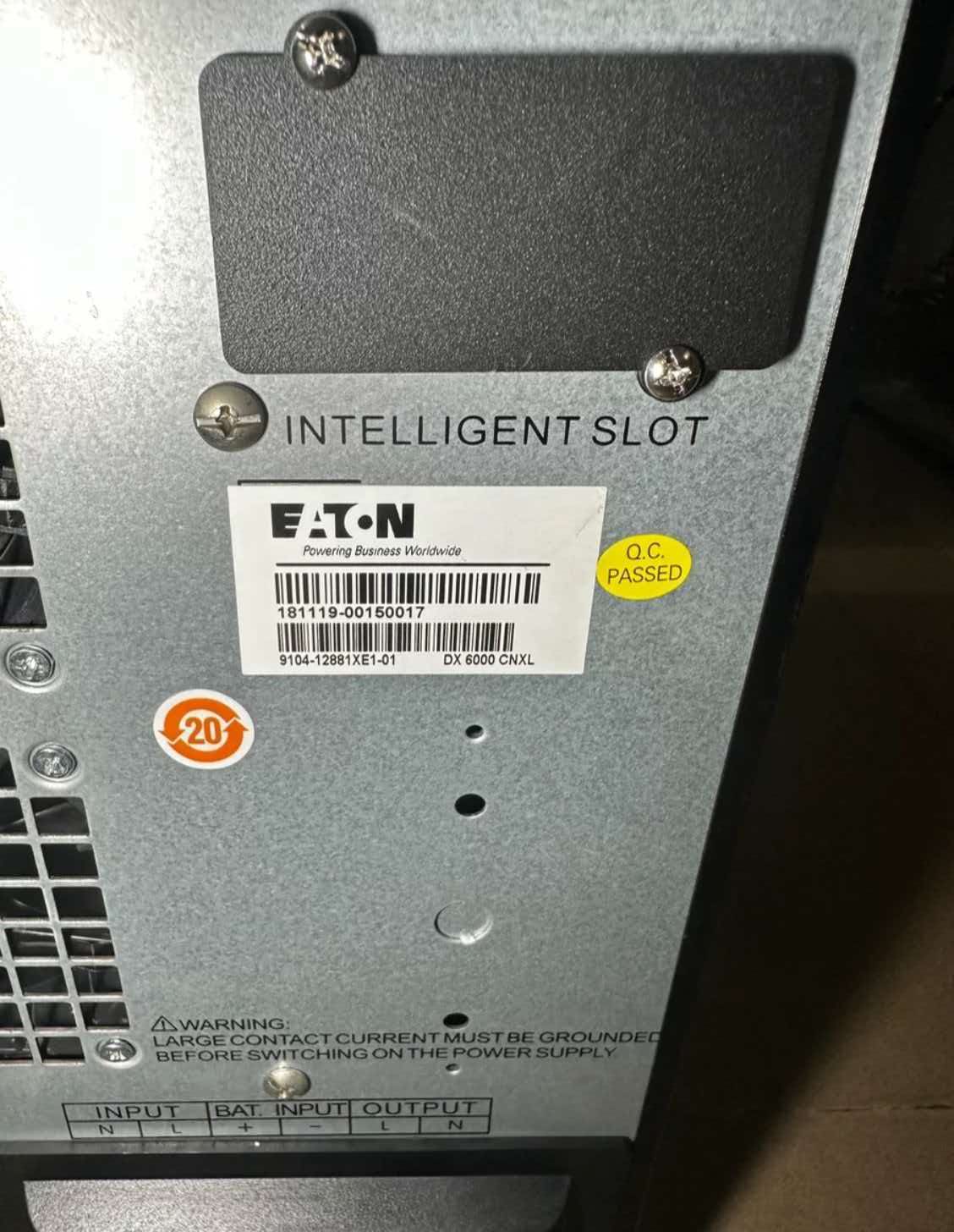
Rack-mount vs tower: Rack-mount units (e.g. SMART1000RMXL2U) fit standard 19-inch control cabinets and are the norm for cabinet-integrated automation; tower units suit standalone installation.
Redundancy: For non-stop processes, consider an N+1 architecture — one additional UPS sharing the load so that a single unit failure never takes the process down. At a minimum, ensure the UPS supports hot-swap batteries so runtime can be restored without a shutdown.
6. Factor in the Environment
Industrial UPSs must survive what office units cannot: ambient temperatures above 30 °C, dust, humidity and vibration. Verify the operating temperature range, IP rating of the enclosure, and whether the unit is designed for continuous industrial duty rather than occasional office use. Fan-filtered or fanless designs matter in dusty environments.
7. Verify Standards and Support
For CE-marked installations, the UPS should comply with IEC 62040-3 and relevant EMC directives. Ask for the datasheet and the runtime curve for your specific load before purchasing — a supplier that cannot provide them is a red flag.
Buying Guide for Glorient Customers
Glorient supplies genuine Eaton UPS systems — from standby units to rack-mount online double-conversion models — with competitive pricing and worldwide delivery. To find the right unit:
- Calculate your total load in watts and the required backup time.
- Browse the online UPS range, line-interactive range or standby range depending on the topology you need.
- Send your load list and application details via the quote request form — our team will confirm the correct model, runtime and accessories within 24 hours.
UPS selection is about matching the load, the topology and the runtime — not just picking the biggest box. If you are unsure, send us your load list and we will recommend the model that fits.
Frequently Asked Questions
What is the difference between online and line-interactive UPS topologies?
An online (double-conversion) UPS continuously regenerates the output, isolating the load from all mains disturbances and giving zero transfer time. A line-interactive UPS passes mains through and corrects voltage via a transformer, switching to battery only on outage - cheaper but with a brief transfer and no frequency regulation.
How do I size a UPS in VA versus watts?
The VA rating is the apparent power; watts is the real power the load draws. Sum the watt ratings of the connected equipment, add a 20-30 percent growth and efficiency margin, and confirm the UPS power factor can deliver that many watts - many UPS models cannot deliver their full VA rating as watts.
What runtime do I need for safe shutdown?
Runtime depends on how long the load must run or shut down cleanly. For server rooms, 5-15 minutes is usually enough to trigger graceful shutdown or generator start-up. Calculate required battery autonomy from the load and the shutdown sequence, then size the battery accordingly.