
At a Glance. Grippers are chosen in a hurry more often than almost any other automation component, and the consequences show up as dropped parts, slipped workpieces and premature wear rather than as an obvious fault. The SCHUNK range we supply — from compact units such as PSH 32-1-EX through to heavier assemblies such as CTS B-300-MM-V — covers both gripping systems and tool clamping technology. The selection process is the same in both cases, and it starts with arithmetic rather than with a catalogue page.
1. Calculate the gripping force you actually need
The gripping force is set by the physics of holding the part, not by the gripper you happen to have in stock. For a horizontally held part with the jaws gripping the sides:
Required force per jaw = (mass × g × safety factor) ÷ (friction coefficient × number of gripping points)
The two terms that are usually underestimated are the friction coefficient and the safety factor. Coefficient values for common materials are far lower than most people assume:
| Contact material | Typical friction coefficient |
|---|---|
| Steel on steel, dry | 0.10 – 0.20 |
| Steel on hard jaws, oily | 0.05 – 0.10 |
| Rubber or polyurethane pad on metal | 0.50 – 0.80 |
| Machined aluminium on aluminium | 0.30 – 0.60 |
Oily steel on hard jaws is the worst realistic case and can reduce the effective friction by an order of magnitude compared with a rubber pad. Apply a safety factor of at least 2 for static holding, and considerably more where the part is accelerated, rotated or subjected to a machining force during the grip.
2. Stroke, finger count and jaw geometry
- Parallel versus angular. A parallel gripper keeps the jaws aligned throughout the stroke, which suits prismatic parts and precise placement. An angular gripper closes in an arc and suits round parts and confined spaces.
- Stroke. It must exceed the tolerance spread of the parts plus the clearance needed to enter and exit. Take the largest and smallest workpiece in the family and check both ends.
- Finger count. Two fingers for simple pick and place. Three for round or irregular parts where centring matters. Concentric designs for very precise centring.
- Jaw length and mass. Long fingers add moment load to the guidance and reduce the useful life of the gripper. Keep the finger mass within the value given in the datasheet for the size concerned.
3. Environment and variant suffixes
The base model number is only part of the order. Variants change sealing, temperature range and approval. When you compare part numbers such as PSH 32-1-EX and CTS B-300-MM-V, note the weight and the full attribute list on each product page, and confirm the following against the datasheet for the exact variant:
- Ambient temperature range and any high-temperature variant
- Protection class and suitability for coolant, dust or washdown
- Whether an explosion-protection variant is required for the area classification
- Actuation: pneumatic port size and pressure range, or electric supply and interface
- Position sensing: whether the gripper accepts proximity switches for open and closed
4. Common specification mistakes
- Sizing on pressure alone. Gripping force also depends on the effective piston area, which varies between sizes and finger configurations.
- Ignoring dynamic loads. A robot that accelerates a held part at 2 g needs gripping force for 3 g, not 1 g.
- Assuming the old model is still current. SCHUNK revisions a family several times over its life; the replacement usually fits but rarely with the same finger interface.
- Forgetting the fingers. Base jaws, blank fingers and special fingers are separate catalogue items and dominate the lead time.
5. Replacing an existing gripper
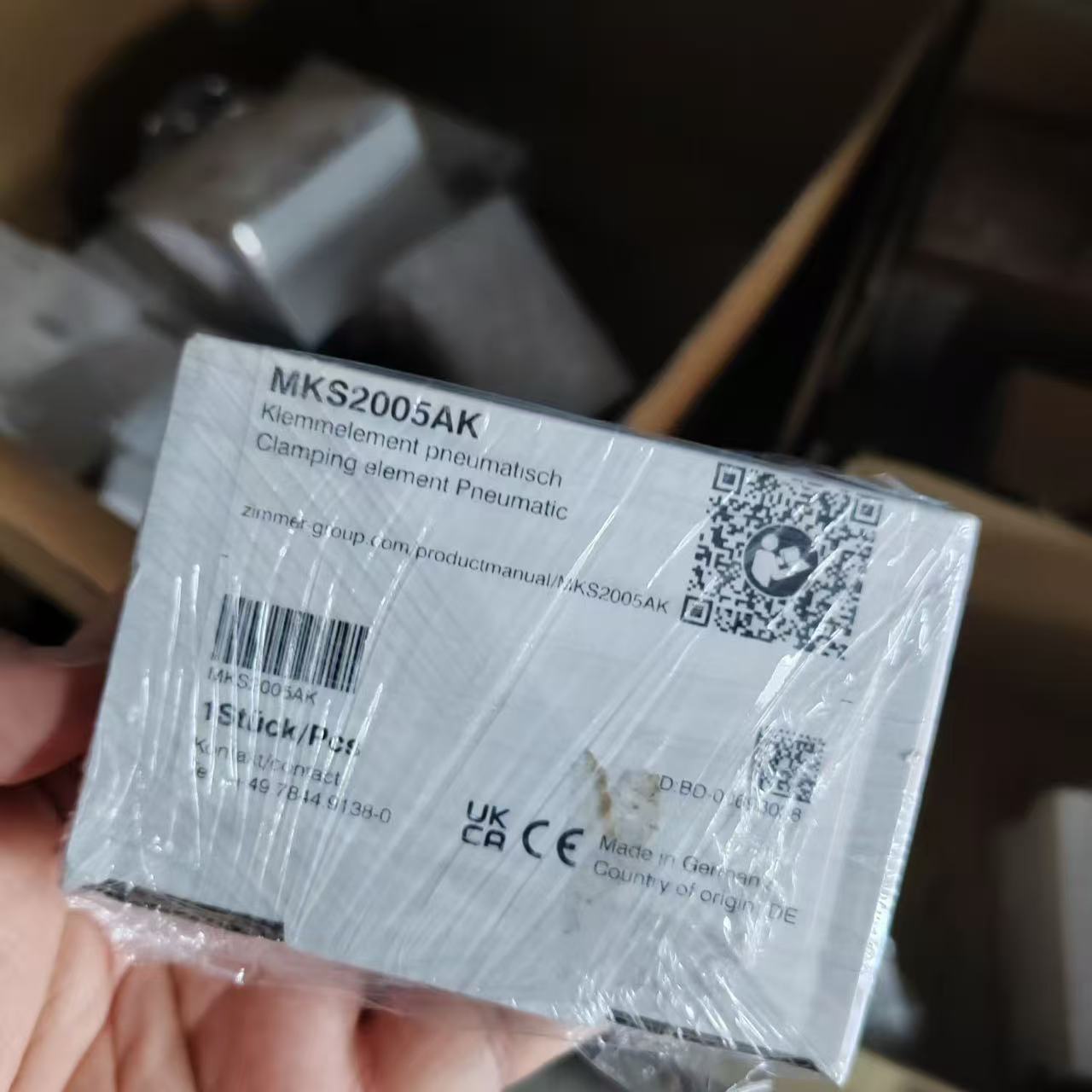
For replacements, the fastest route is to send the complete model number and order number, a photo of the identification plate, and the workpiece mass and cycle rate. Where a family has been superseded we will propose the current equivalent and flag any interface change to the fingers or the mounting pattern. Browse the gripping systems and tool clamping categories, or the full SCHUNK range, and we will confirm availability and lead time with the quotation.