
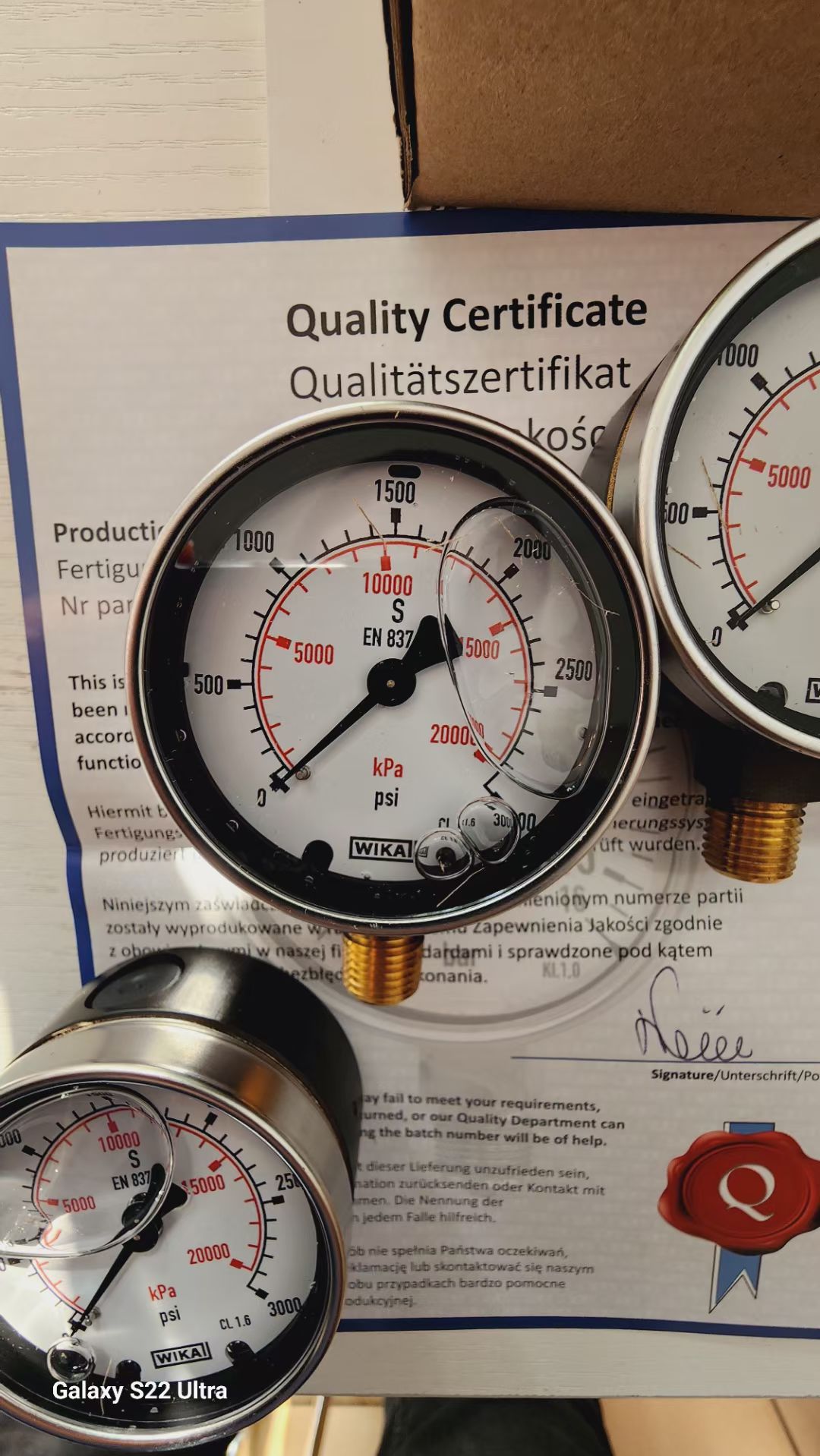
WIKA is the world's largest manufacturer of pressure gauges, and its naming system makes the range easier to navigate than it looks: the first digits define the series, and the suffix defines the variant (e.g. DW = dry with liquid case, 53 = flanged lower connection). This guide compares the pressure gauge series Glorient most commonly supplies — 111, 131, 212, 213 and 232 — so you can pick the right family without decoding the catalogue.
1. The WIKA Pressure Gauge Family at a Glance
| Series | Wetted material | Case material | Accuracy | Typical applications |
|---|---|---|---|---|
| 111 | Copper alloy | Steel, black | Class 1.6 / 2.5 | General industry, hydraulics, compressors |
| 131 | Stainless steel | Stainless steel | Class 1.6 | Compact machines, food basics, hygiene |
| 212 | Stainless steel | Stainless steel | Class 1.0 | General process, non-corrosive to mildly aggressive media |
| 213 | Stainless steel | Stainless steel | Class 1.0 | Chemical / process industry, 100 mm and larger |
| 232 / 233 | Stainless steel | Stainless steel, crimped | Class 1.0 (0.6 optional) | Aggressive media, high-precision process duties |
2. Series 111 — The Industrial Workhorse
The 111.11 / 111.31 is the classic general-purpose industrial pressure gauge: copper-alloy internals, steel case, Class 1.6 accuracy, available in 50–100 mm dial sizes. It is the right choice for air, water, oil, hydraulic fluids and non-aggressive gases — and it is the most cost-effective option where stainless steel is not required. Variants include the 111.12 with a lower connection and liquid-filled versions for vibration.
3. Series 131 — Compact Stainless Steel
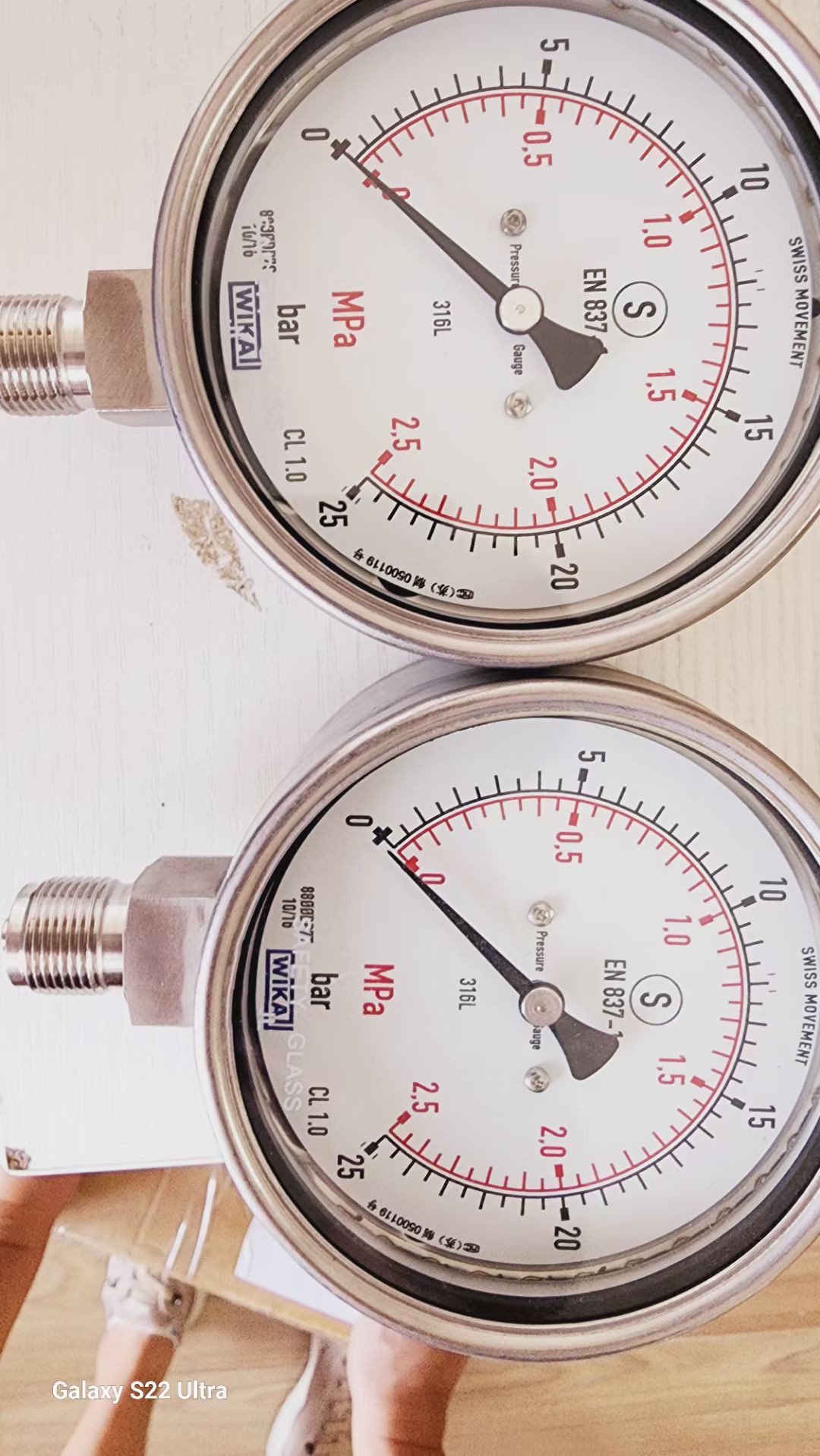
Where space is tight or a degree of corrosion resistance is needed, the compact 131.11 offers stainless steel construction in small dial sizes (40–63 mm). It suits machine building, food and beverage basics, and OEM panel installations where a full-size process gauge is overkill.
4. Series 212 and 213 — General Process Stainless Steel
Moving to Class 1.0 accuracy, the 212.25 is a stainless steel gauge for general process duties — mildly aggressive media, moderate vibration, 100 mm dial. The 213.53 steps up with a larger dial (100–160 mm) and a design optimised for the chemical and process industries, still at Class 1.0 but built for more demanding installations.
5. Series 232 / 233 — The Precision Process Gauges
At the top of the family, the 232.30 / 233.30 combines full stainless steel construction (including the crimped case) with Class 1.0 accuracy and an optional Class 0.6 for calibration-grade readings. This is the series for aggressive, corrosive or high-purity media — acids, caustics, pharmaceuticals — where gauge failure is not an option. It also offers the widest range of optional features: different connections, seals, and liquid filling for pulsation.
6. Which WIKA Series Should You Choose?
Three questions decide the series:
- What is the medium? Air, water, oil → 111. Mildly aggressive → 212. Aggressive / corrosive / high-purity → 213 or 232/233.
- What accuracy do you need? Indication only → Class 1.6/2.5 (111). Quality-critical readings → Class 1.0 (212/213/232). Calibration-grade → Class 0.6 (232/233).
- What environment? Machine vibration → liquid-filled 111 or 233. Washdown / food → stainless case (131/212/213/232).
For the full selection process — range, connection and accessories — see our pressure gauge selection guide.
Buying Guide for Glorient Customers
Glorient supplies genuine WIKA pressure gauges across all series with competitive pricing and worldwide delivery. To order correctly:
- Identify your series from the three questions above, or send a photo of your old gauge's nameplate.
- Browse the pressure measurement range for the series and dial size you need.
- Send your medium, working pressure and connection thread via the quote request form — we will confirm the exact model and accessories within 24 hours.
The WIKA series system exists to make selection repeatable: match the medium, match the accuracy, match the environment — and the right series is usually obvious. If you are unsure, our engineers will help you map your requirements to the correct model.
Frequently Asked Questions
What is the difference between the WIKA 111 and 212 pressure gauge series?
The 111 series is the standard industrial Bourdon-tube gauge in brass with a 63 mm or 100 mm case. The 212 series offers stainless-steel wetted parts for corrosive media and a liquid-filled case option for vibration damping, making it the tougher sibling for harsh duty.
Which WIKA gauge should I use in a harsh or vibrating environment?
Choose a 212 series (or higher) with a stainless-steel case and a glycerine-filled movement. The liquid fill damps pointer flutter from vibration and pulsation, and the stainless wetted parts resist corrosive process media.
What does the WIKA 232 series add over the 111?
The 232 series is an all-stainless, hermetically sealed gauge for aggressive media and outdoor service. It adds full stainless construction and sealing that the standard 111 brass model lacks, suitable for chemical and offshore environments.