
Eaton's single-phase UPS range can look confusing at first glance — BC, SMART, 5PX and 9PX all protect critical loads, but they sit at very different levels of the range. This comparison explains what each series is for, so you can match the UPS to the load instead of guessing by price.
1. Eaton Single-Phase UPS Line-Up at a Glance
| Feature | BC series | SMART series | 5PX series | 9PX series |
|---|---|---|---|---|
| Topology (IEC 62040-3) | Standby (VFD) | Line-interactive (VI) | Line-interactive (VI) | Online double-conversion (VFI) |
| Typical power range | 300–1500 VA | 700–3000 VA | 750–3000 VA | 700–11000 VA |
| Transfer time | ~5–10 ms | ~2–6 ms | ~2–4 ms | 0 ms |
| Output waveform | Stepped approx. | Approx. sine | Pure sine | Pure sine |
| LCD status display | No | Some models | Yes | Yes |
| Hot-swap batteries | No | Optional | Yes | Yes |
| Best for | Single PCs, small devices | Small servers, networks | Servers, key single devices | Critical loads, server rooms, PLCs |
2. The BC and SMART Series: Entry and Mid-Level Protection
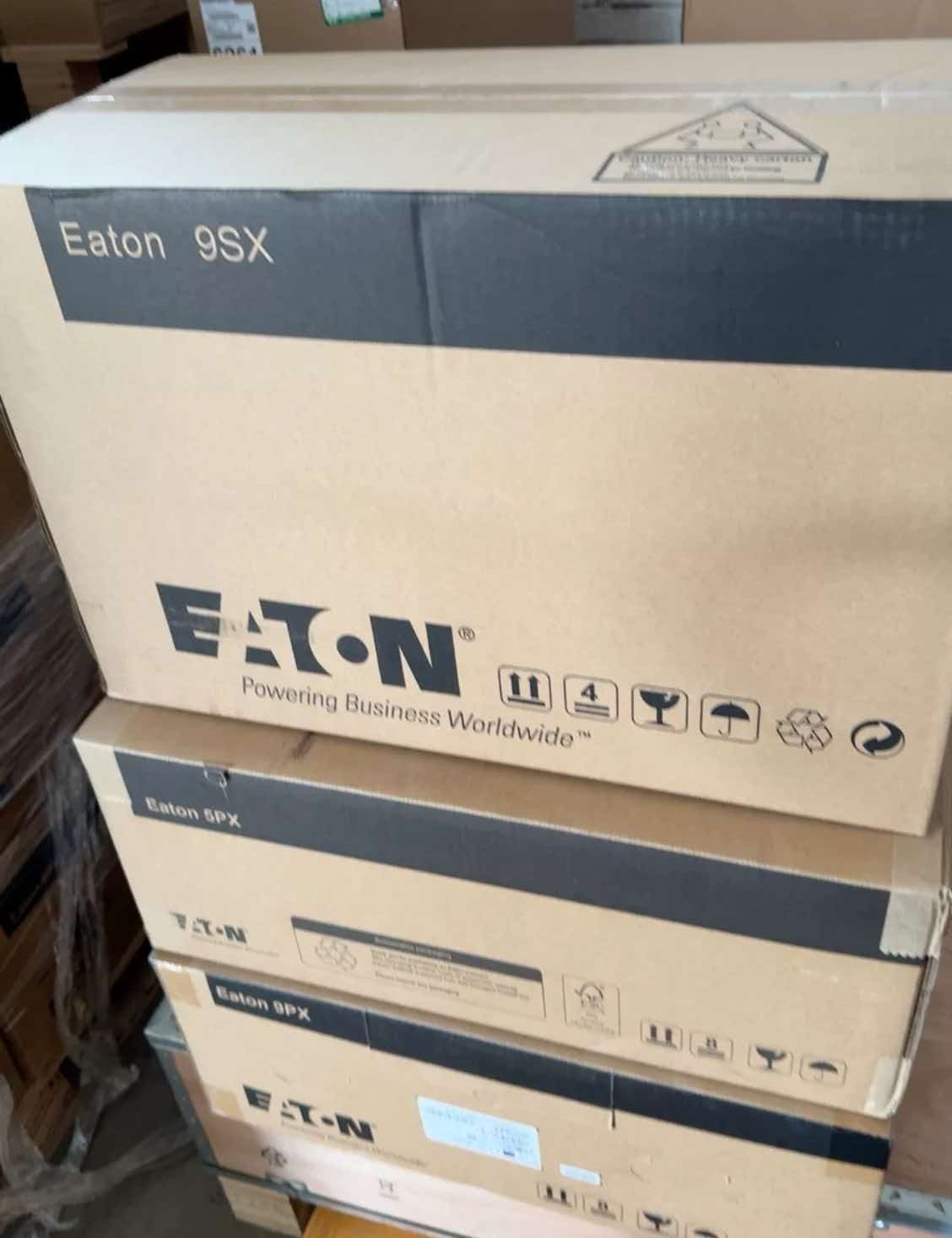
BC series is Eaton's entry-level standby UPS — simple, inexpensive and fine for protecting a single PC, router or small device against outages. Because it is a standby topology, the output switches to battery in a few milliseconds and the waveform is stepped rather than pure sine; sensitive electronics may not be fully protected from mains distortion. See the BC850R as a typical unit.
SMART series sits above it with line-interactive technology: voltage regulation keeps the output within tolerance during brownouts without switching to battery, so the battery is preserved and the load sees cleaner power. It is a sensible baseline for small servers and network equipment. See the rack-mount SMART1000RMXL2U.
3. 5PX vs 9PX: The Decision Most Buyers Actually Face
Once the load is critical — a production server, a control cabinet, an industrial PC feeding a process line — the choice narrows to 5PX or 9PX. The differences matter:
- Topology: the 5PX is line-interactive (VI) with a short transfer time; the 9PX is online double-conversion (VFI) with 0 ms transfer — the inverter continuously regenerates the output, so the load never sees the mains drop at all.
- Power quality: the 9PX fully isolates the load from mains frequency and harmonic disturbances, which is what PLCs, servers and audio/video systems need; the 5PX corrects voltage but does not regenerate the waveform.
- Scale: the 9PX extends to higher power ratings and offers parallel-capable and rack/tower configurations for server rooms.
- Cost: the 5PX is noticeably cheaper — the right choice where the mains is stable and a few milliseconds of transfer are acceptable.
Representative models: 5PX1500IRTNG2 (line-interactive) and 9PX1500IRT2UBS (online double-conversion).
4. How to Decide: Scenario-Based Recommendations
- Single PC, router, small lab device → BC series. Cost matters, uptime is not critical.
- Small server, office network, POS system → SMART series. Line-interactive voltage regulation at a reasonable price.
- Production server, key industrial PC, small cabinet → 5PX series. Pure sine output, LCD status, hot-swap batteries.
- Process control, PLC-based production, server rooms → 9PX series. 0 ms online protection for loads that cannot tolerate any interruption. For more detail on sizing, see our industrial UPS selection guide.
Buying Guide for Glorient Customers
Glorient supplies genuine Eaton UPS units across all four series with competitive pricing and worldwide delivery. To compare the right models:
- Work out your load in watts and the required backup time.
- Browse the online UPS range (9PX), line-interactive range (5PX, SMART) or standby range (BC).
- Send your load list via the quote request form — we will recommend the right series and model within 24 hours.
The series determines the topology, and the topology determines whether your load is truly protected. If in doubt between 5PX and 9PX, ask yourself one question: can your process tolerate a few milliseconds of interruption? If not, the 9PX is the answer.
Frequently Asked Questions
What is the difference between the Eaton 5PX and 9PX series?
The 5PX is a line-interactive UPS for servers and network equipment, while the 9PX is an online double-conversion UPS with true sine-wave output and zero transfer time. The 9PX protects more demanding or three-phase-critical loads; the 5PX is the value option for standard IT.
Which Eaton UPS is right for a small server room?
A 5PX 1500-3000 VA line-interactive unit is usually the right balance of cost and protection for a small server room or network closet. If the room also runs sensitive or mission-critical equipment, step up to the online 9PX for continuous voltage and frequency conditioning.
What is the difference between the Eaton 5P and 5PX?
The 5P is the entry-level line-interactive series with basic LCD monitoring, while the 5PX adds more outlet control, network management capability and a graphical display. The 5PX is the more manageable, network-ready choice for IT environments.