
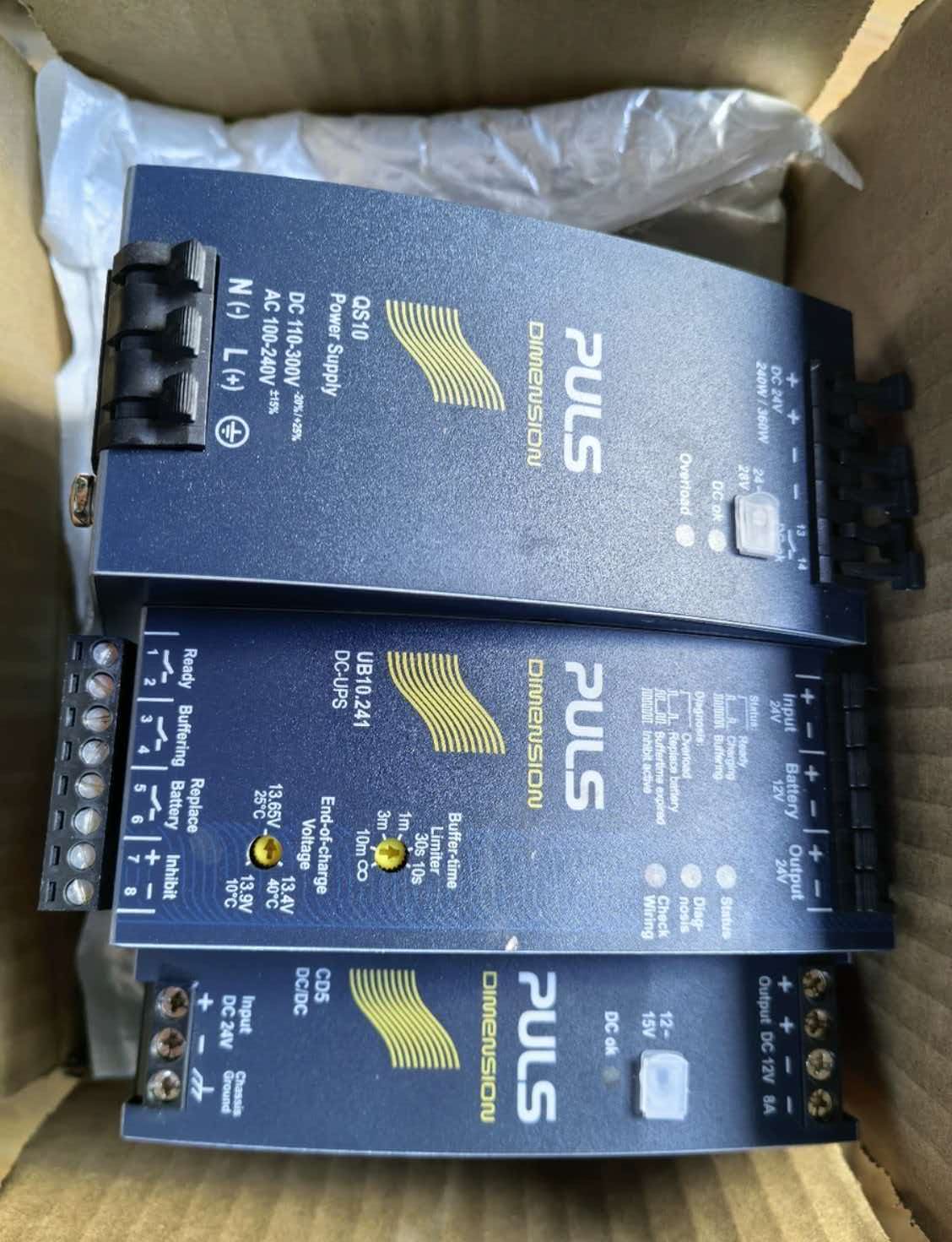
The DIN-rail power supply is the heart of every control cabinet — it feeds the PLC, the sensors, the relays and the HMI. Choosing the wrong unit leads to brownouts, nuisance faults and unexplained machine stops. This guide covers the selection process for a PULS DIN-rail power supply, which has been the reference for industrial power for decades.
1. Determine the Voltage and the Total Load
Start with the output voltage: 24 V DC is the de facto standard for industrial control. Some applications need 12 V or 48 V — confirm before selecting.
Then calculate the power budget:
- Sum the power consumption of every 24 V device: PLC, I/O modules, sensors, relays, HMI, valves, communication modules
- Add the inrush/startup current of loads like valves and solenoids
- Apply a 20–30 % headroom — a power supply running near its limit ages faster and drops voltage under load spikes
- If a 24 V device needs more current during a specific cycle (e.g. valve banks firing together), size for that peak, not the average
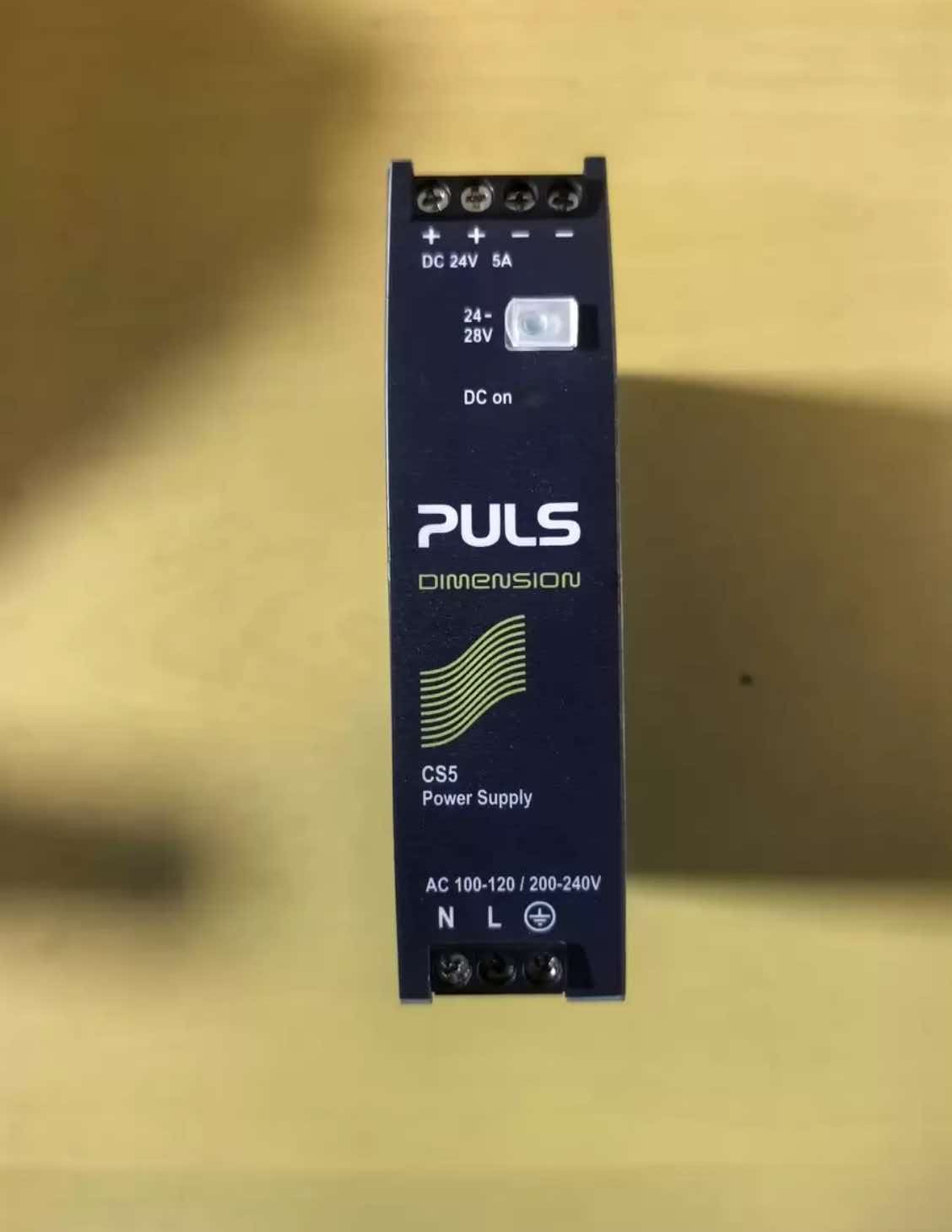
Example: a cabinet with a PLC (~12 W), 16 sensors (~30 W), 12 relays (~20 W) and an HMI (~15 W) totals roughly 77 W, or ~3.2 A at 24 V. With 30 % headroom, select a 5 A unit — for example the PULS CP5.241.
2. Choose the Series That Fits the Budget and Space
| Series | Positioning | Typical output | Best for |
|---|---|---|---|
| CP series | Classic general purpose | 2–20 A at 24 V | Standard machine and plant cabinets |
| CS series | Compact | 1–3 A at 24 V | Small cabinets, space-constrained applications |
| ML series | Miniature | Up to ~4 A | Ultra-compact installations, field boxes |
| QS / QT series | High-performance | Wide range | Demanding processes, high reliability requirements |
3. Consider Redundancy and Buffering
Standard machines run a single power supply. If a power-supply failure means an entire line stops, consider:
- Redundancy modules — two power supplies feed a redundancy module (e.g. PULS MLY or SP series), so one unit can fail without dropping the load.
- Buffer modules — a buffer (e.g. SP960.241-SR) bridges short mains dips (tens of milliseconds to seconds), which is usually all a machine needs to ride through a brief disturbance.
- DC-UPS — for longer ride-through (minutes), a DC-UPS with battery keeps critical control alive during a full power cut.
4. Check the Features That Matter for Your Application
- Active parallel operation — allows two units to share the load; verify the unit supports it before paralleling
- DC-OK signal / diagnostics output — a dry contact or signal that the PLC can read when the output is healthy, enabling remote fault detection
- Wide input voltage range — 3-phase-capable units (e.g. 340–575 V AC) for plant supplies; single-phase 180–264 V for standard cabinets
- Adjustable output — a potentiometer to fine-tune the output voltage helps compensate for voltage drop over long cable runs
5. Environment and Certification
Verify the operating temperature range for your cabinet (PULS units typically work from −25 °C to +70 °C with derating), and check IP rating for field-mounted versions. For CE-marked machines, the power supply should comply with the relevant safety standards (SELV/PELV per EN 61558 / EN 62368) — a certified unit is non-negotiable on safety-rated circuits.
6. Field Power Supplies for Decentralised Power
For distributed I/O and sensors mounted in the field rather than the cabinet, a Field Power Supply (IP67, e.g. FPS300.245) brings 24 V directly to the point of use, saving copper and simplifying machine wiring.
Buying Guide for Glorient Customers
Glorient supplies genuine PULS DIN-rail power supplies, buffer and redundancy modules with competitive pricing and worldwide delivery. To order the right unit:
- Calculate your 24 V load in watts (see step 1) and confirm whether you need buffering or redundancy.
- Browse the AC/DC power supply range, DC/DC converters or buffer & redundancy modules.
- Send your load list and cabinet details via the quote request form — we will confirm the correct model and accessories within 24 hours.
Power supply selection is a load calculation plus a reliability decision. Get the current right, add the headroom, and decide whether the line can afford a momentary dip — the right PULS unit will outlast the machine.
Frequently Asked Questions
How do I size a DIN-rail power supply?
Sum the maximum current draw of all connected loads, add a 20-30 percent margin for inrush and future expansion, and select a unit whose rated output current exceeds that total. Oversizing also keeps the supply cooler and lengthens its service life.
What is the difference between single-phase and three-phase DIN-rail power supplies?
Single-phase units run from a standard 230 V AC line and suit loads up to a few hundred watts. Three-phase units connect to 400 V AC and support higher power with better phase balancing - preferred for large cabinets and motor-heavy automation.
What efficiency and overload features should I look for?
Look for high efficiency (90%+), active power-factor correction, short-circuit and overload protection, and a power-boost capability that briefly supplies up to 150% current for inrush. A DC-OK contact for remote status monitoring is also valuable.