
Temperature is the second most measured process variable after pressure, yet temperature instrumentation is often chosen on habit rather than engineering. The two questions that matter are: do you need a local reading or a signal for the control system? and what accuracy does the application require? This guide walks through the selection process, using WIKA's range as the reference.
1. First Choose the Measurement Principle
| Type | Output | Typical accuracy | Best for |
|---|---|---|---|
| Bimetal thermometer | Local dial display | Class 1.0–2.0 (EN 13190) | On-site reading, tanks and piping, cost-effective |
| Resistance thermometer (RTD) | Electrical resistance (Pt100) | ±0.1–0.5 °C class | Process control, PLC/SCADA integration |
| Thermocouple | Millivolt signal (K, J, T...) | ±1–2 °C typical | Very high temperatures (>600 °C) |
| Temperature transmitter | 4–20 mA / HART / digital | ±0.1–0.2 % of span | Long signal runs, high accuracy, remote monitoring |
2. When a Bimetal Thermometer Is Enough
A bimetal thermometer is the economical answer when an operator needs a local temperature reading — on tanks, pipelines, compressors and HVAC systems — and no signal is required for the control system. Selection is simple:
- Measuring range — choose a range where the expected working temperature sits in the middle of the scale, per EN 13190.
- Accuracy class — Class 1.0 for quality-critical readings, Class 2.0 for general indication.
- Dial size — 63 mm for compact panels, 100 mm for process readouts, 160 mm for control rooms.
- Probe (stem) length and diameter — the stem must reach sufficiently into the medium; verify immersion depth against the datasheet.
- Wetted material — copper alloy for non-corrosive media, stainless steel for aggressive or hygienic service.
Representative models include the WIKA 73 (standard bimetal), the WIKA 732.26 (adjustable stem version) and the WIKA 736.51 (rigid stem process version).
3. When You Need a Temperature Transmitter
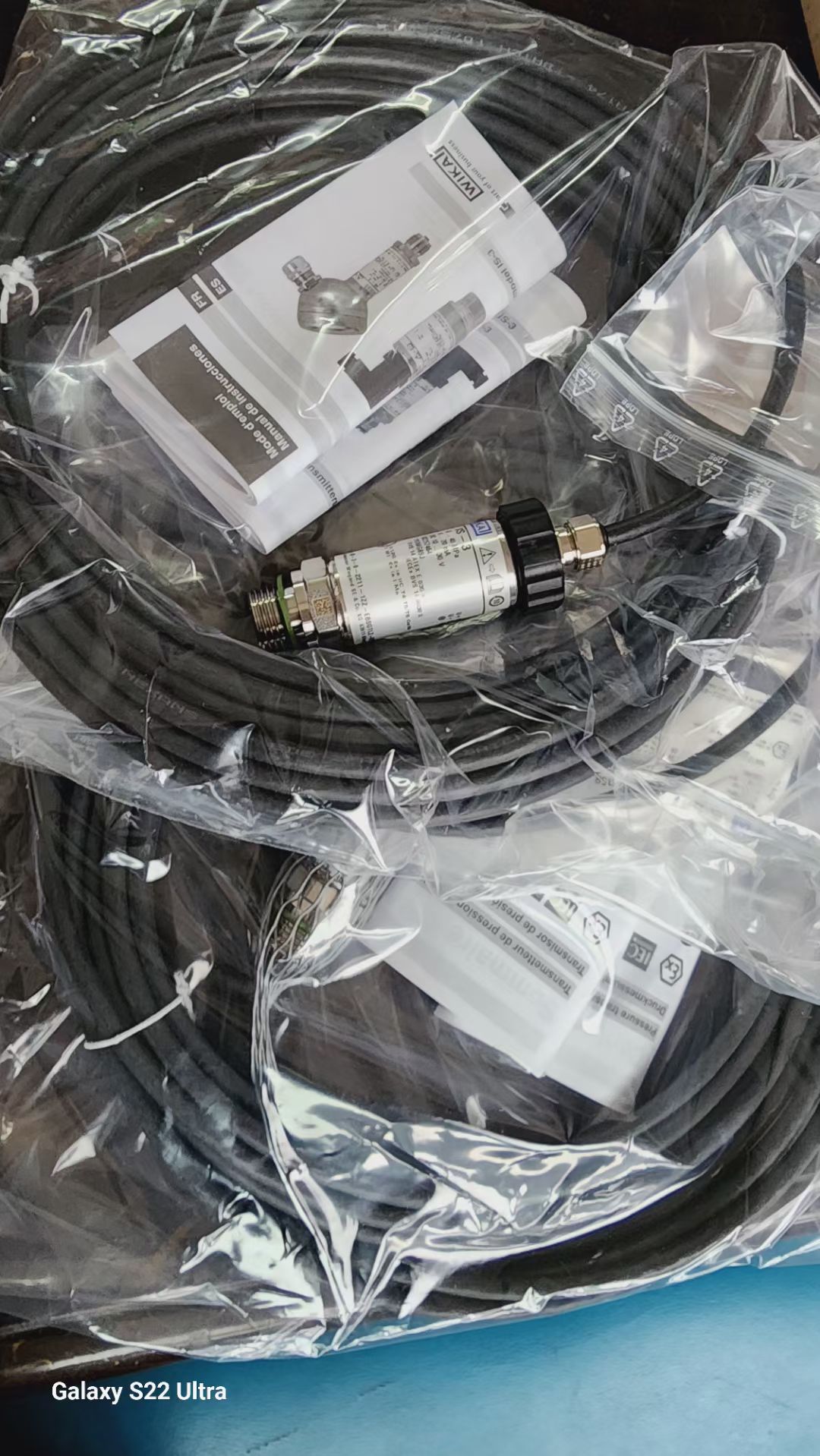
If the temperature must reach a PLC, SCADA system or remote monitoring station, a temperature transmitter converts the sensor signal into a standard output — typically 4–20 mA, optionally with HART protocol for configuration and diagnostics. Key selection factors:
- Input sensor — Pt100 RTD, thermocouple or resistance input; the transmitter must match the sensor type.
- Output signal — 4–20 mA two-wire is the industrial standard; consider HART or fieldbus for smart monitoring.
- Accuracy and drift — transmitter accuracy is expressed as a percentage of span; for long runs or high accuracy, the transmitter also eliminates the voltage-drop errors of direct sensor wiring.
- Housing — DIN rail, head-mounted or field housing depending on the installation.
The WIKA T32.xS is a widely used head-mount temperature transmitter covering Pt100 and thermocouple inputs with a programmable 4–20 mA output.
4. Decide: Local Reading or Signal?
- Local reading only, no control loop → bimetal thermometer. Cheapest, no power required, decades of service.
- Process control, alarms, SCADA → RTD + temperature transmitter. The transmitter handles long cable runs and delivers the accuracy the control loop needs.
- Very high temperatures (>600 °C) → thermocouple + transmitter. Thermocouples are the only practical sensor in that range.
Many installations combine both: a bimetal thermometer for the local display plus a transmitter for the signal — belt and braces for critical processes.
Buying Guide for Glorient Customers
Glorient supplies genuine WIKA temperature instruments with competitive pricing and worldwide delivery. To select the right unit:
- Confirm whether you need a local reading, a signal, or both.
- Note the temperature range, stem length and process connection of your application.
- Browse the temperature measurement range or send your details via the quote request form — our engineers will confirm the correct model within 24 hours.
Temperature measurement is a two-step decision: the principle first (bimetal vs RTD vs transmitter), then the mechanical details. Get both right and the reading will be reliable for the life of the machine.
Frequently Asked Questions
Should I choose a bimetal or gas-filled thermometer?
A bimetal thermometer uses two bonded metals that expand at different rates, and is rugged and low-cost for general indication. A gas-filled (gas-actuated) thermometer has a capillary and bulb, allowing remote reading and higher accuracy. Choose bimetal for local direct-mount use, gas-filled for remote or panel mounting.
What stem length do I need for a temperature gauge?
The stem (or bulb) must reach the point in the process where the temperature is representative - typically the middle of the pipe or vessel. Standard stem lengths are 63 mm, 100 mm and 160 mm; select so the sensing element sits in the flow, not just in the fitting.
What accuracy class is typical for a temperature gauge?
Class 1 (±1% of span) is standard for most industrial bimetal thermometers, with Class 1.6 and 2.5 available for lower-cost indication. Use Class 1 or better for process-critical measurement.