
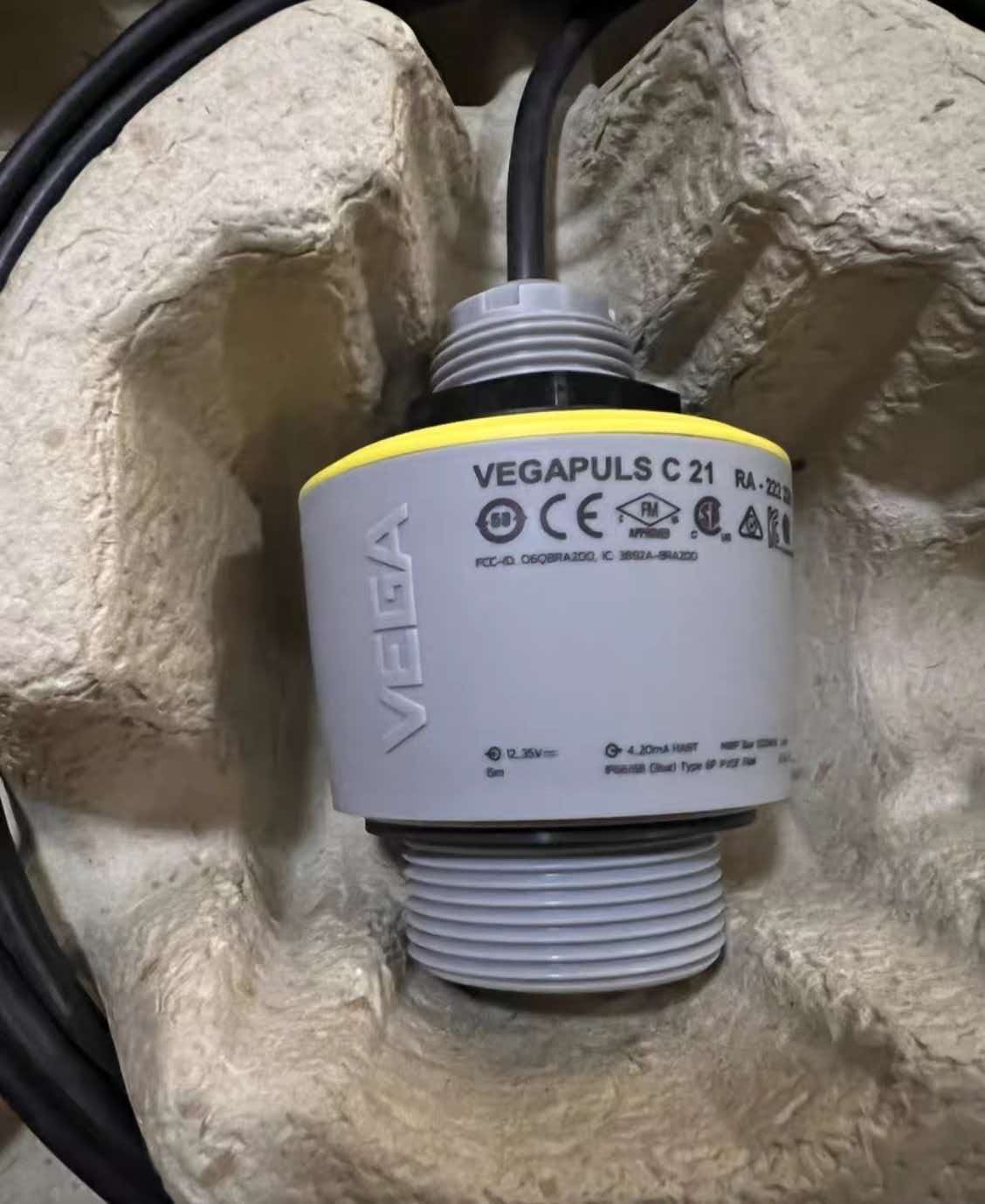
At a Glance. VEGA and Endress+Hauser (E+H) are the two brands most often shortlisted for an 80 GHz radar level transmitter — and on paper their flagship compact models are nearly identical. The VEGAPULS 64 and the Micropilot FMR62 both offer 80 GHz operation, ±2 mm accuracy, a 30 m maximum range, a −40 °C to +200 °C process window, 4-20 mA HART output and ATEX / IECEx / FM approvals. The real difference appears at the edges of each portfolio: VEGA pushes further into extreme temperature and pressure (VEGAPULS 69: +450 °C, 160 bar), while E+H integrates tighter with its own flow and analytics ecosystem (Promass, Promag, Liquiline). If you need a like-for-like FMR62 alternative, VEGAPULS 64 is the most direct crossover; if your plant is already standardized on E+H instrumentation, FMR62 keeps the toolchain consistent.
1. Head-to-Head: VEGAPULS 64 vs Micropilot FMR62
| Specification | VEGA VEGAPULS 64 | E+H Micropilot FMR62 |
|---|---|---|
| Radar frequency | 80 GHz | 80 GHz |
| Accuracy | ±2 mm | ±2 mm |
| Max measuring range | 30 m | 30 m |
| Process temperature | −40 °C to +200 °C | −40 °C to +200 °C |
| Antenna concept | Compact, encapsulated antenna | Encapsulated antenna |
| Output | 4-20 mA HART | 4-20 mA HART |
| Approvals | ATEX, IECEx, FM | ATEX, IECEx, FM |
| Best for | Clean liquids, tight nozzles, direct FMR62 alternative | Harsh chemical service, E+H-standardized plants |
| Stock page | VEGAPULS 64 | FMR62 |
Because both instruments are true 80 GHz devices, beam width is narrow and nozzle reflections that trouble 26 GHz sensors are largely eliminated. In practice, either transmitter can be dropped into most liquid-storage applications between 0.4 m and 30 m without process redesign.
2. Where VEGA Pulls Ahead
Extreme temperature and pressure. The VEGAPULS 69 extends the family to +450 °C and 160 bar with a lens antenna (PTFE or PEEK), which is why it shows up on LNG terminals and chemical reactor vessels where the standard 64 class is out of range.
Aggressive chemistry. The VEGAPULS 66 uses an encapsulated PEEK antenna explicitly rated for aggressive liquids, making it the safer pick on acids, chlorination and solvent service where antenna wetted-parts matter.
Interface and foam. For two-liquid interface measurement (oil/water) or foam-covered surfaces, VEGA’s guided-wave line — VEGAFLEX 81 (rod or cable, ±2 mm) and the +450 °C coax-probe VEGAFLEX 86 — bypasses free-space radar limits because the signal travels down the probe. E+H answers with the FMI51 capacitive probe (−80 °C to +200 °C) for low-dielectric sticky media, so the choice is application-driven rather than brand-driven.
3. Where Endress+Hauser Pulls Ahead
Ecosystem consistency. If the vessel already carries an E+H Promass F 100 Coriolis meter, a Promag P 100 electromagnetic flowmeter or a Liquiline analyzer, adding the FMR62 keeps configuration software, spare-parts inventory and maintenance training on one platform — a real cost at plants running hundreds of loops.
Budget instrumentation tier. On simple vented tanks where 80 GHz is overkill, the E+H FDU91 ultrasonic sensor (up to 5 m liquids) covers the low end; VEGA’s counterpart is the VEGASON 62. Both brands price this tier aggressively.
4. Replacement and Cross-Reference: FMR62 ↔ VEGAPULS 64
A frequent procurement question is whether VEGAPULS 64 can replace an existing Micropilot FMR62 during a transmitter failure or a long-lead-time situation. The short answer: yes, in most vented and pressurized liquid tanks, because both are two-wire 4-20 mA HART devices with ±2 mm class accuracy and similar encapsulated-antenna geometry. Before ordering, verify three items against the old nameplate:
- Process connection (flange size/rating or thread) and nozzle extension length;
- Measuring range and dielectric of the media — both 80 GHz units tolerate low-dielectric media better than 26 GHz, but confirm the 30 m ceiling;
- Temperature/pressure class — above +200 °C, step up to VEGAPULS 69 instead.
Send Glorient your existing model and tag number and we will confirm the nearest in-stock crossover, including antenna configuration, within one business day.
5. Decision Summary
| Your situation | Recommended model |
|---|---|
| Standard liquid tank, 30 m or less, neutral media | VEGAPULS 64 or FMR62 — spec-equivalent, pick by price/lead time |
| Acids, solvents, chlorinated service | VEGAPULS 66 (PEEK) or FMR62 with matching seal |
| Above +200 °C or above 16 bar (LNG, reactors) | VEGAPULS 69 |
| Oil/water interface, foam, bypass chamber | VEGAFLEX 81 / VEGAFLEX 86 |
| E+H-standardized plant, one toolchain | Micropilot FMR62 |
6. FAQ
Is the VEGAPULS 64 a direct replacement for the Micropilot FMR62?
Functionally yes for most liquid applications: both are 80 GHz, ±2 mm, 30 m-range HART transmitters with ATEX/IECEx/FM approvals. Always match process connection and antenna extension before ordering, and re-run the empty/full calibration after installation.
Which radar handles above 200 °C?
The VEGAPULS 69 is rated to +450 °C and 160 bar; on the guided-wave side, VEGAFLEX 86 also reaches +450 °C with a coax probe.
Do both transmitters work with my existing HART DCS?
Yes. VEGAPULS and Micropilot both output standard 4-20 mA with HART protocol, so they integrate with any HART-capable DCS or asset-management system without special gateways.
Need a quote? Glorient stocks the full VEGAPULS / VEGAFLEX line and Endress+Hauser Micropilot transmitters with international shipping. Browse in-stock VEGA models or browse Endress+Hauser models, or send us your tag list for a same-week quotation.