
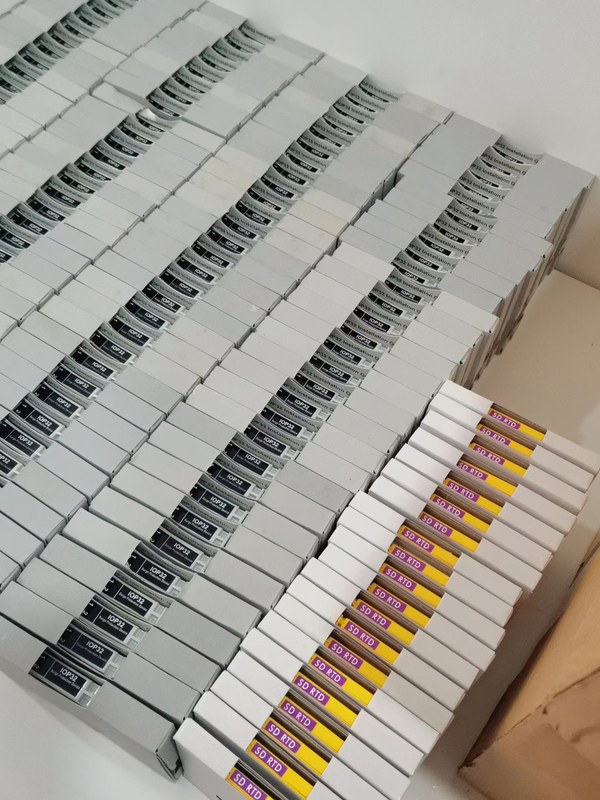
At a Glance. Both the MTL7706+ shunt-diode (Zener) barrier and the MTL4544 galvanic isolator limit energy entering a hazardous-area 4-20 mA loop to safe levels — but the engineering conditions around them differ fundamentally. The Zener barrier is a passive, low-cost device that demands a high-integrity intrinsically-safe earth (typically ≤1 Ω to earth) and shares a ground reference with the safe-area side. The galvanic isolator is an active 2- or 3-port isolating device that needs no IS earth, blocks ground loops, and passes HART transparently. The rule: reliable plant IS earth available and budget-driven → MTL7706+; no dedicated IS earth, ground-loop problems, or HART-heavy loops → MTL4544.
1. Head-to-Head Specification Table
| Specification | MTL7706+ (Zener barrier) | MTL4544 (Galvanic isolator) |
|---|---|---|
| Principle | Passive shunt-diode energy limit | Active galvanic isolation |
| Channels | 1 (also 2-ch MTL7787+) | 1 |
| Signal | 4-20 mA analog loops | 4-20 mA + HART transparent |
| Max voltage / current | 28 V / 250 mA (93 Ω end-to-end) | Loop-powered via 20-35 VDC supply |
| Accuracy impact | Adds 93 Ω series resistance | ±0.1% |
| IS earth required | Yes (≤1 Ω high-integrity earth) | No |
| Isolation | None (galvanically common) | 2-way (MTL5544) / 3-way (MTL4544) |
| SIL capability | Per loop assessment | SIL 2 capable |
| Operating temperature | −20 °C to +60 °C | Industrial panel range |
| Approvals | ATEX, IECEx, FM, CSA | ATEX, IECEx, FM |
| Mounting | DIN-rail TS35, safe area only | DIN-rail, safe area |
| Stock page | MTL7706+ | MTL4544 |
2. The Deciding Factor: The IS Earth
A shunt-diode barrier works by clamping voltage with Zener diodes and shunting fault energy to earth through a fuse-protected path. That fault current has nowhere to go except the barrier earth — so the standard requires a dedicated, tested, high-integrity earth (≤1 Ω), separate from the plant protective earth. Many brownfield panels simply cannot prove that earth.
The MTL4544 sidesteps the issue entirely: energy limiting happens inside the isolator, and the hazardous-side circuit is galvanically separated from the safe side, so no IS earth, no earth-loop study, no special earthing busbar. The cost is an active device that needs 20-35 VDC power and introduces ±0.1% measurement error (the barrier adds none, only 93 Ω of loop resistance).
3. Secondary Selection Criteria
- Ground loops: long cable runs between different earth potentials will corrupt shared-ground barrier loops. Isolation fixes this by construction — a very common retrofit driver.
- HART: both are HART-transparent, but the isolator's active electronics drive long loops more cleanly. For very noisy or long 4-20 mA runs, MTL also offers the MTL4850 HART line conditioner (up to 3,000 m loops, 250 Ω).
- Density: the 2-channel MTL7787+ halves DIN-rail space for digital signals; for whole fieldbus segments, protection is handled by the MTL SWK surge protector (10 kA) rather than barriers.
- Vendor-side digital integration: when the goal is pulling HART data into the DCS rather than just protecting loops, the MTL831B (32-channel) and MTL838B (64-channel) HART multiplexers replace dozens of individual devices with Modbus TCP/Ethernet.
4. Selection Summary
| Your situation | Recommended device |
|---|---|
| New panel, proven ≤1 Ω IS earth, cost-sensitive digital/analog I/O | MTL7706+ / MTL7787+ |
| No IS earth, or unprovable earth condition | MTL4544 |
| Ground-loop corruption on long loops | MTL4544 / MTL5544 |
| SIL-rated loop requirement | MTL4544 (SIL 2 capable) |
| Bulk HART integration to DCS | MTL831B / MTL838B |
| Fieldbus surge / lightning exposure | MTL SWK |
5. Replacement and Cross-Reference
Typical replacement scenarios:
- Legacy Pepperl+Fuchs / Stahl barriers: the MTL7706+ is a like-for-like 1-channel 28 V / 93 Ω swap in most 4-20 mA loops — match the end-to-end resistance and polarity before ordering.
- Barrier → Isolator retrofits: plants often replace failed barrier channels with MTL4544 isolators one-for-one when the IS earth certificate has lapsed — this removes the earth dependency permanently.
Send Glorient the old barrier's model and loop parameters (Voc, Isc, end resistance) and we will confirm the MTL equivalent from stock within one business day.
6. FAQ
Can I install a Zener barrier in the hazardous area?
No. Shunt-diode barriers must be mounted in the safe area (or an approved pressurized enclosure). Only the isolator concept has certified hazardous-area variants; for field-mounted protection, consider the MTL SWK for fieldbus segments.
Does the MTL4544 pass HART?
Yes — the MTL4544 is HART-transparent, so handheld communicators and asset-management software work through it. Its ±0.1% analog accuracy applies to the 4-20 mA signal.
Why does the MTL7706+ have 93 Ω end-to-end resistance?
The fuse-and-Zener network's series resistance is part of the energy-limiting design. It reduces available loop voltage, so verify your transmitter's minimum terminal voltage still holds at 20 mA with 93 Ω plus cable resistance in the loop.
Need a quote? Browse in-stock MTL intrinsic safety products — barriers, isolators, HART multiplexers and surge protection — or send your loop schedule for a same-week quotation.