
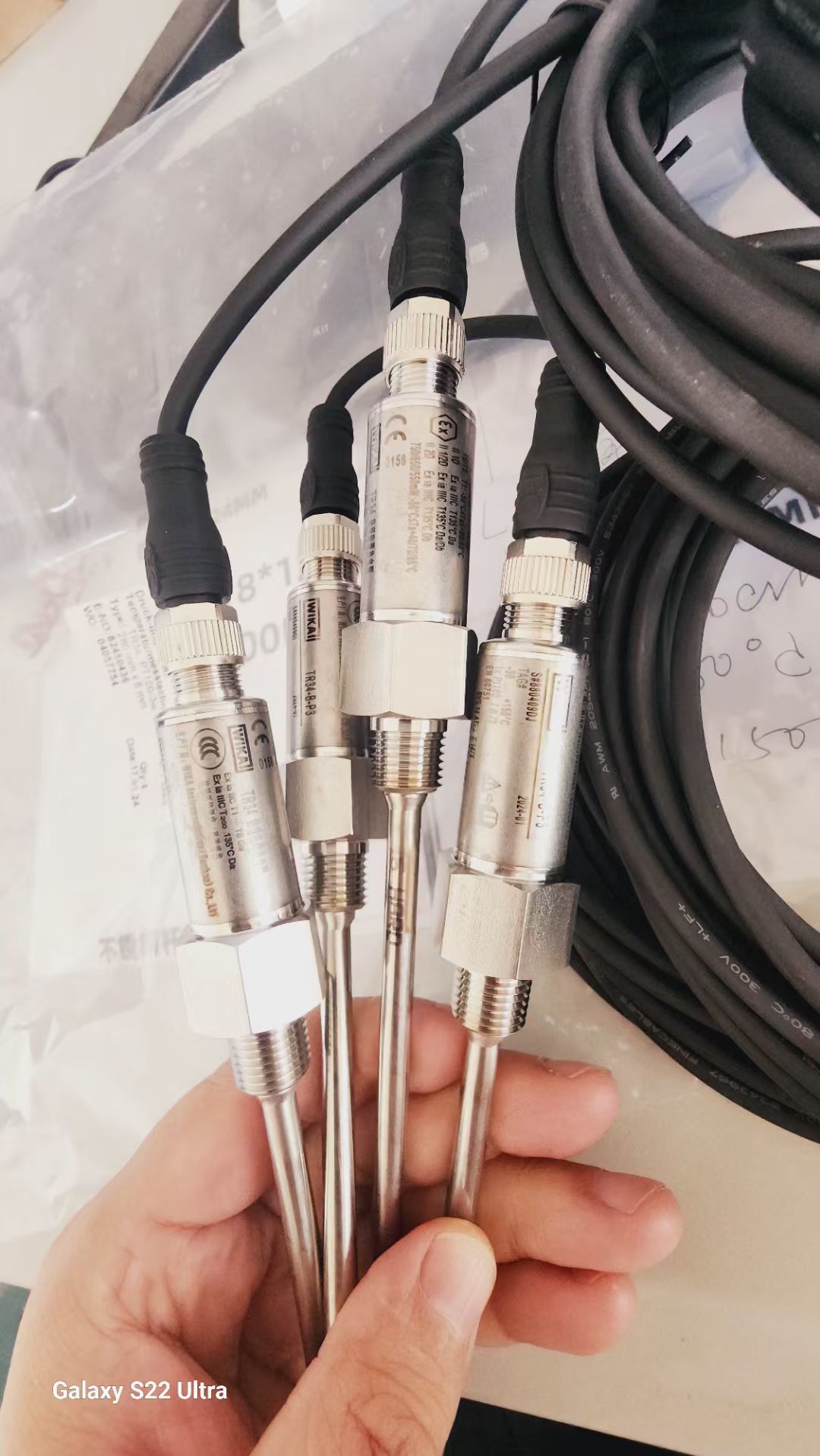
WIKA offers four families of temperature instruments, and knowing which family fits which job is the key to correct selection. This guide compares the bimetal thermometer (73 series), the resistance thermometer (TR10), the thermocouple (TC10) and the head-mount transmitter (T32), so you can map your application to the right series.
1. The WIKA Temperature Family at a Glance
| Series | Principle | Output | Typical range | Best for |
|---|---|---|---|---|
| 73 series | Bimetal | Local dial display | −30…+500 °C | Economical on-site readings, tanks, pipes, HVAC |
| TR10 series | RTD (Pt100) | Resistance signal | −200…+600 °C | Process control with PLC/SCADA |
| TC10 series | Thermocouple | Millivolt signal (K, J) | −40…+1100 °C | High-temperature furnaces, exhaust, combustion |
| T32.xS | Transmitter | 4–20 mA / HART | Depends on sensor | Long signal runs, high accuracy, remote monitoring |
2. Series 73 — The Bimetal Workhorse
The 73 series bimetal thermometer is WIKA's economical answer for local temperature indication: no power required, robust, and decades of service life. It is the right choice when an operator needs a reading at the point of measurement — on tanks, pipelines, compressors and HVAC systems. Variants include adjustable stem versions such as the 732.26 and rigid stem process versions such as the 736.51.
3. TR10 Series — The RTD for Process Control
When the temperature must reach a PLC or SCADA system, the TR10 resistance thermometer converts temperature into a Pt100 resistance signal with high accuracy and long-term stability. It covers the widest practical range (−200…+600 °C) and is the standard for process instrumentation, chemical plants and machine building. Choose the connection head and process connection to match your cabinet and installation.
4. TC10 Series — The Thermocouple for High Temperatures
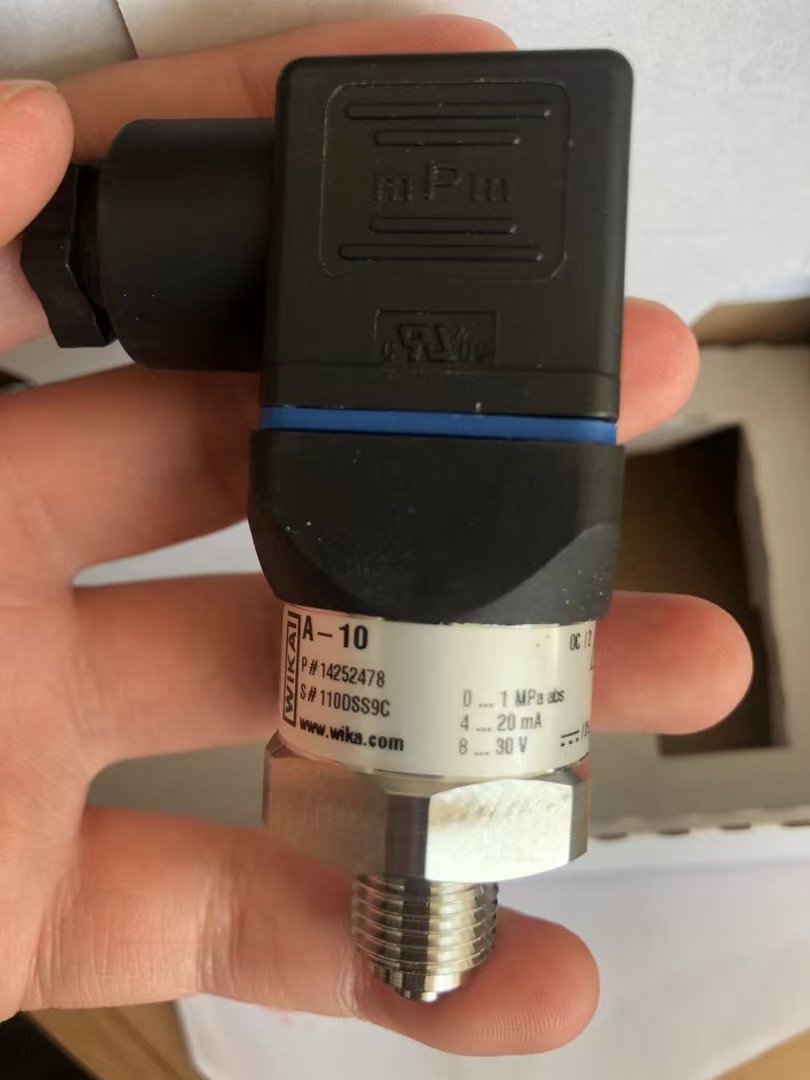
Above roughly 600 °C, resistance elements drift and fail — the TC10 thermocouple is the correct tool, covering up to about 1100 °C with K-type and J-type elements. Furnaces, exhaust systems and combustion applications rely on thermocouples. The millivolt output is small, so signal conditioning (a transmitter) is recommended for long cable runs.
5. T32.xS — The Transmitter That Makes It Smart
The T32.xS head-mount transmitter plugs into an RTD or thermocouple connection head and converts the sensor signal into a standard 4–20 mA output, with HART available for configuration and diagnostics. It eliminates voltage-drop errors on long runs, provides galvanic isolation, and simplifies wiring to the control system.
6. How to Choose Between the Series
- Local reading only → 73 bimetal. Cheapest and simplest; no signal, no power.
- Signal to PLC/SCADA, moderate temperatures → TR10 RTD. The process standard.
- Very high temperatures → TC10 thermocouple. The only practical sensor above 600 °C.
- Long runs, high accuracy, smart diagnostics → add a T32 transmitter to the RTD or thermocouple.
For a step-by-step selection process — range, stem length and signal — see our temperature gauge selection guide.
Buying Guide for Glorient Customers
Glorient supplies genuine WIKA temperature instruments across all four families with competitive pricing and worldwide delivery. To select the right unit:
- Confirm the temperature range and whether a signal is needed.
- Browse the temperature measurement range for the matching series.
- Send your application details via the quote request form — our engineers will confirm the correct model, connection and transmitter options within 24 hours.
The WIKA temperature family is a ladder: bimetal for the local reading, RTD for the process signal, thermocouple for the extreme, transmitter for the distance. Match the rung to your application and the measurement will be reliable for years.
Frequently Asked Questions
Should I choose a bimetal, RTD or thermocouple temperature instrument?
Bimetal is a local mechanical indicator with no signal output. An RTD (Pt100) is the accurate electronic choice for -200°C to +600°C. A thermocouple covers a much wider range up to 1800°C and is more rugged but less accurate than an RTD. Match the sensor to range and accuracy needs.
What is the accuracy difference between an RTD and a thermocouple?
A Pt100 RTD is typically accurate to ±0.1°C to ±0.3°C, while a thermocouple is usually ±1°C to ±2.5°C depending on type. For precise process control, an RTD wins; for very high temperatures or fast response, a thermocouple is used.
When should I use a gas-actuated thermometer?
Use a gas-actuated thermometer when you need a purely mechanical, no-power local or remote readout, or when electrical sensors are unsuitable (explosive atmospheres without an approved transmitter). The capillary allows the display to be mounted away from the sensing point.