
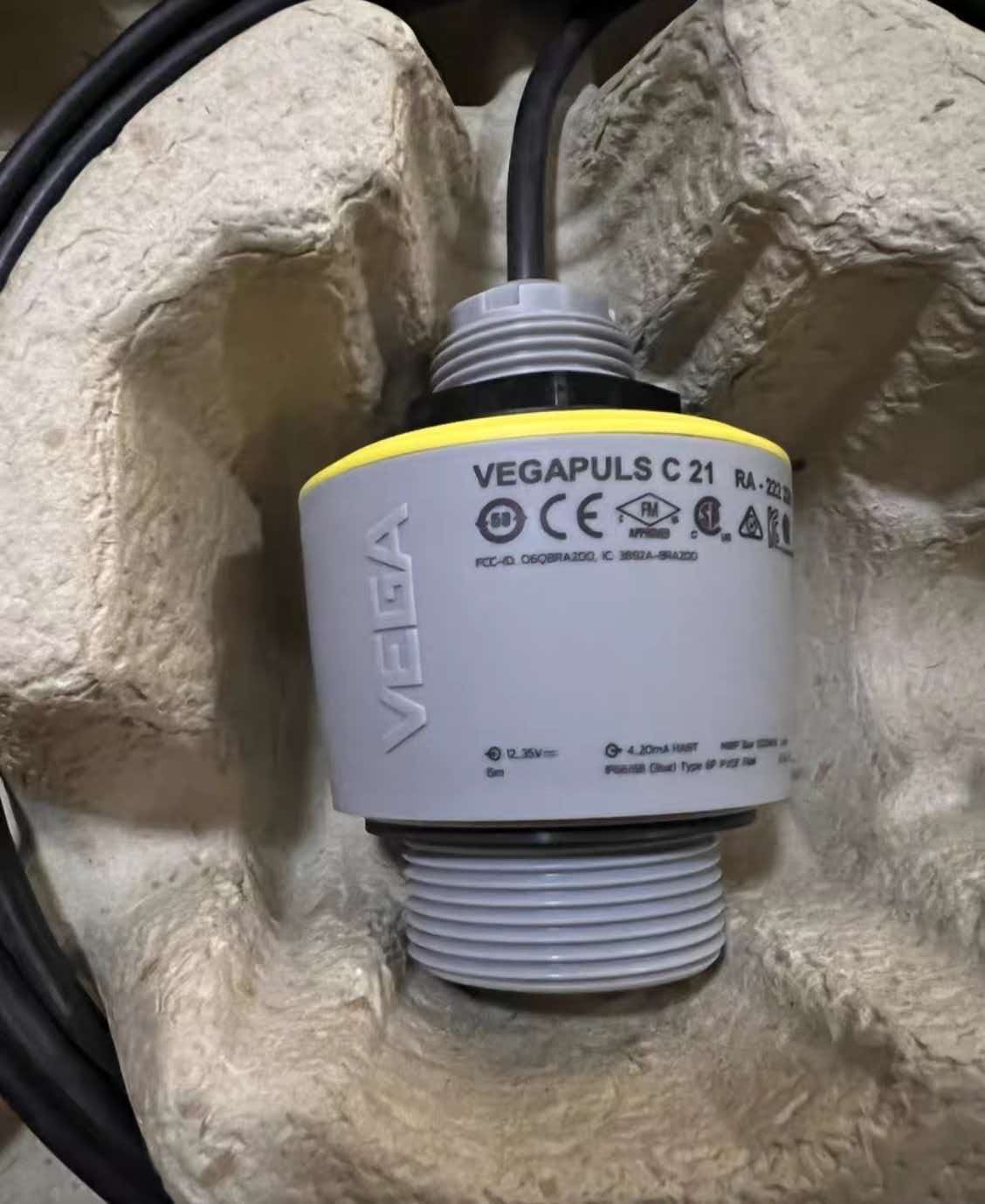
At a Glance. VEGA's level portfolio spans five physical principles, and the right one is driven by four factors — the medium, the measuring range, the process conditions (temperature / pressure / foam / dust) and the vessel type. For most clean-liquid tanks, VEGAPULS (free-radiating radar) is the modern default; for small tanks, bypass chambers and interfaces, VEGAFLEX (guided wave radar) is more precise; for open water/wastewater, VEGASON (ultrasonic) is the low-cost pick; for sticky conductive media and overfill switches, VEGACAP (capacitive) fits; and for pressurized water or narrow sumps, VEGABAR (hydrostatic pressure) is the answer. This guide gives you a decision flow and a side-by-side table.
1. Five Principles Side-by-Side
| Principle | VEGA Family | Best For | Range | Limitations | Stock Example |
|---|---|---|---|---|---|
| Free-radiating radar (80 GHz) | VEGAPULS 64 / 66 / 69 | Clean liquids, solids, agitated surfaces, high temp/pressure | 0–120 m | Not ideal in dense foam without setup | VEGAPULS 64 |
| Guided wave radar (TDR) | VEGAFLEX 81 / 86 | Interface, bypass chamber, small tanks, foam | 0–75 m | Probe must not bend / contact wall | VEGAFLEX 81 |
| Ultrasonic | VEGASON 62 | Open water/wastewater, sumps, low cost | 0–15 m | Sensitive to vapour, foam, wind | VEGASON 62 |
| Capacitive | VEGACAP 64 | Sticky conductive media, overfill point detection | 0–6 m | Not for non-conductive buildup | VEGACAP 64 |
| Hydrostatic pressure | VEGABAR 82 | Pressurized water, narrow wells, continuous level | 0–200 m H2O | Density change affects reading | VEGABAR 82 |
2. Decision Flow — Which VEGA Sensor Should You Choose?
- What is the medium?
Clean liquid → radar (VEGAPULS). Slurry / solids / dust → radar with high sensitivity (VEGAPULS 69). Sticky conductive (adhesive, paste) → capacitive (VEGACAP). Two immiscible liquids (oil/water) → guided wave with interface (VEGAFLEX 86). - What is the range?
> 30 m → free-radiating radar only. 15–30 m → radar or guided wave. < 15 m → any principle. - Any foam, vapour or agitation?
Dense foam → guided wave radar (VEGAFLEX) ignores foam. Vapour / condensate → radar (VEGAPULS 64 with lens antenna). Heavy agitation → radar with echo tracking. - Pressurized or vacuum vessel?
Pressurized → radar or guided wave (no moving parts, works through nozzle). Vacuum → guided wave radar (VEGAFLEX) or capacitive. - Small tank / bypass chamber / stilling well?
Guided wave radar (VEGAFLEX 81) — probe in chamber gives clean echo. - Open water, sump, budget-critical?
Ultrasonic (VEGASON 62). - Narrow well, deep water, need continuous level only?
Hydrostatic pressure (VEGABAR 82). - Overfill / point-level switch needed?
Capacitive point switch (VEGACAP 64).
3. Matching VEGA Series to Your Application (Quick Table)
| Application | Recommended VEGA Model |
|---|---|
| Clean liquid storage tank, 10–30 m, normal pressure | VEGAPULS 64 (radar, 80 GHz) |
| Liquid with light foam / agitation, 0–20 m | VEGAPULS 66 |
| Bulk solids (cement, grain, plastic pellets), dusty silo | VEGAPULS 69 |
| Small tank / bypass / stilling well, interface oil-water | VEGAFLEX 81 (guided wave) |
| High temperature (up to 450 °C) or high pressure vessel | VEGAFLEX 86 |
| Pressurized water / deep well, continuous level | VEGABAR 82 (hydrostatic) |
| Sticky conductive medium, overfill detection | VEGACAP 64 (capacitive) |
| Open channel / wastewater / sump, budget pick | VEGASON 62 (ultrasonic) |
4. Radar vs Guided Wave Radar — The Most Common Question
Both use microwaves, but differ in how the signal travels: free-radiating radar (VEGAPULS) sends the pulse through air, so it needs a clean path and a clear echo; guided wave radar (VEGAFLEX) sends the pulse along a metal probe immersed in the medium, so it is immune to foam, vapour and agitation. Choose VEGAPULS when the tank is large and clean; choose VEGAFLEX when the tank is small, foamy, or needs interface measurement.
5. Process Conditions to Check Before Ordering
- Process temperature: standard sensors up to 80 °C; high-temp versions (VEGAFLEX 86) up to 450 °C.
- Process pressure: radar handles vacuum to 40 bar; verify the flange/thread rating.
- Approvals: ATEX / IECEx for hazardous areas; SIL 2/3 for safety loops (SIL versions of VEGAPULS 64).
- Wetted material: stainless steel 316L standard; PTFE / PEEK for aggressive chemicals.
- Mounting: threaded, flanged or hygienic (EHEDG for food).
6. Related VEGA Products in Stock
- VEGA VEGAPULS 64 — 80 GHz radar, clean liquids.
- VEGA VEGAPULS 66 — radar for agitated/foaming liquids.
- VEGA VEGAPULS 69 — radar for bulk solids / silos.
- VEGA VEGAFLEX 81 — guided wave radar for small tanks.
- VEGA VEGAFLEX 86 — high temp/pressure guided wave.
- VEGA VEGABAR 82 — hydrostatic pressure transmitter.
- VEGA VEGACAP 64 — capacitive point switch.
- VEGA VEGASON 62 — ultrasonic level sensor.
Not sure which VEGA level sensor fits your tank or silo? Request a quote with your medium, range, temperature and vessel type; our engineers will recommend the exact VEGA model and process connection.